
A cautionary tale of the two-month CEO

A cautionary tale of the two month CEO

Earlier this year, I had lunch with a friend I’ll call Phil, who was looking for a new job. Phil had a successful 15-year run with his last employer, and he was well positioned for a COO or CEO position. Two weeks after our discussion, a headhunter told me about a position he was trying to fill.

The client, M&C Inc., had been a leader in its field for close to twenty years. It was still in a market leadership position, but the industry was only a fraction of its former size. It was purchased out of bankruptcy by Mason, who ran it for about 5 years. Mason spends most of time in Singapore, and he realized that taking M&C to the next level required more time with the business in Minnesota than he was willing to give.

I introduced Phil to the headhunter, who presented him to Mason. Mason and Phil met in early March. Within a few weeks, Phil was named CEO. A couple months later, I was preparing to present to a group of executives in transition, when I got a note from Phil. “I didn’t want to surprise you in your presentation, Steve,” Phil said. “But I will be among the executives you will be presenting to tomorrow. Things didn’t work out for me at M&C Inc., and I am looking for a new opportunity.”

The group discussion the next day was on how things might go wrong for executives as they integrate in their new roles. Phil was very open on how things went down. I think it was an eye-opener for everybody in the room. And the painful lessons Phil shared are important for both new executives and hiring companies.
  • 1. The owner didn’t leave the search up to the professionals. He hired a headhunter who uncovered at least one very compelling candidate. The candidate came from a company in adjacent space to the recruiting company, and Phil used that adjacency to make a strong case for how he understood the business.
    Mason, being sold on the good fit of the adjacent business, freelanced in the search process by contacting executives of Phil’s former company. Not only did he query people on what they thought of his candidate, but he attempted to get several of those who took his call to consider the position.

    Of course, all of this behind-the-scenes maneuvering got back to the candidate. Undoubtedly, this left a bad taste in Phil’s mouth. But his interest in finding a new position and getting his first-ever CEO spot led him to look beyond. He remained undeterred as he progressed in the search. And he was offered the position, which he quickly accepted in March.
  • 2. The owner and the CEO could not make a long-distance relationship work. I know a lot of CEOs who succeed working for owners who live thousands of miles away. But a Singapore-Minneapolis axis, with thirteen time zones in between, is hard to manage. There has to be a commitment to 6am or 7pm phone calls, and even the International Date Line can get in the way.

    Even a thirteen-hour time differential can work if the CEO has sufficient autonomy. That is hard to accomplish when (1) it is the first time the individual has held a CEO role, (2) the owner successfully held the role of CEO prior to this search and (3) there are no set communication times.

    Working well with remote ownership requires establishing rules of the road on what needs prior approval, what needs to be reported after the fact and what can just get done. In this situation, establishing those guidelines had not happened at the get-go.
  • 3. The role of an incumbent COO created confusion. A passed-over executive in a situation like this can be trouble for the recently hired exec, especially if they thought they were in line for the position. In this case, Phil believed that the COO was cool with an outside CEO, and he had been told by Mason of a division of labor between the COO and himself.

    But as soon as Phil was in position, the COO received messages from Mason to take the initiative on areas assigned to the CEO. Maybe this was a continuation of past activities, when the owner served as a largely-absent CEO. Maybe this indicated lack of confidence with the new CEO. Whatever the cause, it created ambiguity of roles and responsibilities between the two people in charge. And the CEO did not feel empowered to countermand the owner’s directive and to straighten things out between himself and his COO.
  • 4. The organization’s immune system confronted the CEO from the start. They liked the COO, and they liked the owner, who had bought the business at a point of crisis and had stabilized it (albeit at a point well below its heyday) and set it up for growth.
Phil brought with him a promise and maybe a threat of change. Early on, he was impressed with the institutional knowledge of his reports, less impressed with their functional expertise. It’s unclear whether the organization felt it was being judged, but that is a good assumption. And Mason sold Phil on a mandate for change. Without selling the organization on “What’s in it for me,” a new direction would not seem like a popular course of action.

I never asked Phil if his departure were voluntary or not. Enough things had gone wrong for him to want to bail out early on. Maybe the owner quickly developed buyer’s remorse from afar. Whatever the dynamic, this is a painful tale for all involved. For Phil, his search for the next step in his career was sidelined for months, and he probably didn’t receive the full severance that a spot in a less entrepreneurial enterprise would provide. The whole experience may have led to a little PTSD, which will make it harder for him to jump back into the fray as fully engaged as he was when I first met him.

For M&C, the harm may be even greater. They end up having to conduct a second search. They have been without consistency in leadership for a half year, which might end up more like a full year. They take a blow to their reputation that might hurt them in their next search. The cost involved in getting this right will total hundreds of thousands of dollars, without considering the results of the turmoil on employees or consumers.

My focus is usually on strategies new executives can use to have a successful integration. And I will offer some suggestions. But before that, I’m compelled to make it obvious what an employer could do to make this difficult hire a success.
  • 1. Let the search firm do its job. This story is the poster child for botched interference that created unnecessary ill-will. Instead, the recruitment process should end with a hire feeling like they are wanted and valued.
  • 2. Spend time needed to be clear on expectations. Spell out what are the limits of the employee’s authority. Make clear how his responsibility differs from those of his second-in-command.
  • 3. Bestow your endorsement on the new hire. Make the organization understand that he has your full confidence. Do not participate in or condone any efforts that undercuts the authority he has been given by you.
So, what could the new CEO have done differently?
  • 1. Don’t expect you can succeed without a clear mandate. I think there were enough warning signs here that the best play may have to turn the offer down.
  • 2. Ensure that the commitments you make with the owner on responsibility, reporting and autonomy are explicit. Talk them through. Write them down. Get the owner to make an endorsement of you across the employee community. Make sure any issues on a division of labor with your subordinates are just as clear. Copy the owner on written roles and responsibilities.
  • 3. Hold to these commitments. You’ve just gone through the trouble to “make a contract” on responsibilities. Resist any early attempts that reduce your scope.
  • 4. Control the communications. Given the difficulty in managing time zones, I would assume that directives from the owner to the COO came via email. Any email to the COO from the owner should have the CEO cc’d.
  • 5. Start building the relationships that you need with employees to be successful. Speak with authenticity. Listen to them. Demonstrate how you value them. You need them on your side to accomplish your goals.
Phil’s brief tenure at M&C provides lessons galore for both the executive and the company. An owner needs to stay in his own lane to give a high-risk situation a chance to succeed. An executive must stand firm in response to inappropriate action from a superior, and he has to get a good start in building bridges with employees. I don’t mean to imply that Phil would have succeeded had he and Mason taken different tacks. But without these actions, a slim chance of success quickly became none at all.

The painful path to wisdom

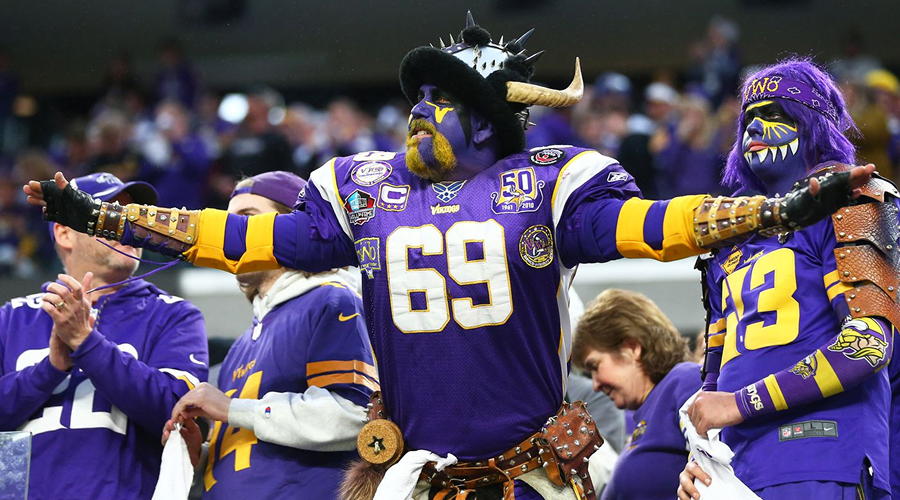
I am a Minnesota Vikings fan. To be a Vikings fan is to know heartbreak. They’ve lost all four Super Bowls they played in, the most recent 47 years ago. Nothing epitomizes the franchise’s futility more than a string of blown field goal attempts at critical moments in big games, including a couple historic fourth quarter misses in playoffs.

About five years ago, the Vikings hired a Nate Kaeding to coach placekicking. Kaeding was a pretty good NFL kicker in his time, making over 85% of his field goal attempts in a nine-year career. Kaeding’s record in post-season play is a different matter, hitting only 8 of 15 attempts. In three playoff games, his misses were the margin of defeat for his team.

Why was Kaeding a good choice to coach the Vikings’ kicker? Because he had a track record of success at the highest level, AND because he has the scars of failure. Scars are the imperfections that make people interesting. They are the proof of perspective; what was a wound has now healed. With that healing comes the ability to analyze what went wrong and what corrective actions could have been taken.

It is far less painful to learn from others’ mistakes, rather than your own. If my missteps can provide a cautionary tale, you can learn from them and save yourself the trauma. Kaeding understood better than almost anybody what the consequences of a breakdown in mechanics or of getting psyched out by the moment can mean. If Kaeding could tell the Vikings’ kicker that his plant foot was too close to the ball on five of his playoff misses or to be prepared if the laces are facing him, that is wisdom to embrace.

Brigid Bonner is one of Executive Springboard’s mentors. She has a remarkable resume blending IT and marketing, having served as General Manager at Target.Direct, Chief Information Officer at United Health Technologies, VP of Digital Marketing for Schwan’s Home Service and Chief Experience Officer for CaringBridge, the first social network set up to communicate and support loved ones during a health journey. With all her successes, she impressed me most when she told me that the greatest value she could bring as a mentor would be in showing her scars.

I think Brigid’s generosity in sharing her failures is critical in a mentor. And it is one of the biggest differences between an executive coach and a mentor. A coach has expertise as a listener, with great value coming from the questions she asks. A mentor has been in the arena. With that experience comes credibility and wisdom that is relevant to a mentee.

Organizations don’t often deal with failures well. A data breach might cost a CIO their job. And it can be difficult for them to land their next position, because the hiring company uses past as prologue instead of considering how much learning this person has gained. Finding a way to tap into this wisdom, this experience gained from facing a situation you hope you never encounter, can pay enormous dividends.

As a Viking fan, hope springs eternal. Maybe, just maybe, a kicker in purple can boot it right down the middle in the waning moments of the big game this year. And maybe it takes somebody who has been there, done that and missed some to make the difference.

Breaking Bad News

A colleague and I were given the unpleasant job of firing a long-tenured advertising agency. The decision had nothing to do with performance; the agency was just the victim of a consolidation of vendors on our part. Our meeting with one of its partners was set for Monday morning. Coincidentally, the firm’s other partner invited my colleague (let’s call him John) and me to a dinner at his house over the intervening weekend. Saturday night came, and John and his wife were a late scratch.
My wife and I had a wonderful dinner at the agency principal’s house that Saturday (he and his wife happened to be among our best friends.) Monday came, and my friend’s partner joined John and me in John’s office. John looked at me and didn’t say a word. The task of giving the bad news fell entirely on me! I stumbled through, and the agency principal was more gracious than I expected or deserved. That night, my agency friend and I drank a couple scotches together. I reiterated what I said to his partner that this did not reflect their good work. He reiterated that this would not impact our friendship.

And John? He went on to lead marketing organizations and business units. By all accounts he has had a successful career. But I noticed he was vocal in earnings calls when there was good news to report, silent when news wasn’t so good. I wonder if this inability to deliver bad news got in the way of John even going farther in his career.

The SPIKES Protocol
Leaders have to learn how to give bad news. Being absent is not an option. Yet, I don’t remember being taught this particular skill at Wharton. My education on the subject was primarily through trial and error. And the errors can be painful for all parties.

There are professionals who leave school well versed in delivering bad news. Maybe that’s because bad news from an oncologist is often more devastating than bad news from a marketing Vice President. Baile, Buckman, et. al. (2000) provided the definitive “how to” in The Oncologist journal. The particular process they provided the medical profession is called the SPIKES protocol. Here are the elements:
  • S: SETTING UP the Interview. Find the right time. Arrange for privacy. Include significant others of the patient. Sit down. Make connections. Manage time and interruptions.
  • P: Assessing the Patient’s PERCEPTION. Ask before telling, such as, “What do you understand about why we conducted these tests?”
  • I: Obtaining the Patient’s INVITATION. Ask whether the patient wants all the details, or just the bottom line.
  • K: Giving KNOWLEDGE and Information to the Patient. Start by saying you have bad news to share. Use non-technical language. Temper how blunt you are.
  • E: Addressing the Patient’s EMOTIONS with Empathetic Responses. Check for the patient’s emotional response. Identify the emotion. Consider the reason for the emotion. Give the patient time to express their feelings. Connect with them by saying something that shows you understand what they are feeling.
  • S: STRATEGY and SUMMARY. Ask if the patient is ready to discuss a treatment plan. Share options with them. Share responsibility for treatment plan with the patient. Work to ensure patient understands the efficacy or purpose of treatment options.
I think the SPIKES protocol should be applied by business leaders in thinking through how to deliver their own bad news. Let’s consider two different audiences that might receive news: (1) subordinates, either direct or indirect reports and (2) bosses, including boards of directors, analysts or shareholders.

Sharing Bad News with your Employees
Perhaps you can hide behind your HR resources, and have them give news of terminations at an individual or group level to your team. Maybe you’ll just let news leak out that a decision has been taken by the Exec Team that is contrary to the position you took to support your people. Maybe employees can read in Fast Companyabout the fine paid out by your company that will mean no bonuses this year. And maybe you will lose the respect of your team by not being authentic with them.

The SPIKES protocol for delivering bad news to your employees is very similar to what doctors have to do:
  • S: Set up a meeting with urgency. People have the right to know as soon as possible. You may have a small cabinet of direct reports who get an early “heads up.” And they may have useful comments on your communication to a larger group. But it’s important to get your message out as soon as you can, or in coordination with communication by colleagues.
  • P: You can ask if people are aware of an issue. It invites them to speak up, which might be useful later on. And this can remind them of previous communication you’ve had with them.
  • I: Generally, obtaining an invitation to provide information is skipped. While you should be respectful of people’s desire for information, there is a message that must be received whether or not you are invited to provide it.
  • K: Explain how a decision was made. If you took a position contrary to a final decision, explain what won the day. People will know what your position was. They will now find you supporting a decision that was different than you had espoused. There has to be a reason why. Provide the justification. Speak up to your audience. Doctors might dumb down their message to avoid medical speak. Talk to your audience in a way that matches its expertise. Prepare your comments. Be direct with your message. Ensure that people realize the decision taken is final.
  • E: Be frank about your own reaction, but avoid saying, “I know how you feel.” You still have a job; the people you are talking to might lose theirs. Practice your presentation well enough to avoid a written script. Ensure that your body language matches your verbal message.
    Allow time for people to vent, but not to appeal the decision. Listen to what they have to say. It might feel like this is directed at you. Most of the time this is just how people process bad news and begin to think about how it will affect them.
  • S: Provide a glimpse into the future. Will the staff be asked to put in significant overtime for the next month? Will HR be contacting individuals to tell them about their future with the organization? Will the proposed acquisition mean that people need to turn over all documents to lawyers?
You may think that people will be numb after your announcement and may not absorb next steps easily. Give them more credit than that. How does this office calamity stack up to the patient who finds herself discussing treatment options with her oncologist immediately after receiving a diagnosis? Nobody wants to be left hanging after receiving bad news. Provide the remedy, or at least the options that might be taken to get to a better position. Get people to start focusing on the future.

Summarize, document, follow up and follow through. End your meeting with a concluding statement of the problem and the immediate next steps. Send a note that memorializes the discussion. You can acknowledge the emotions that were shared in the discussion and include the steps that will follow. And commit yourself to the process, to make sure that commitments you make or are made by others happen as intended.

Sharing Bad News with Bosses
Things don’t always go as planned in business. And sharing negative variances with the CEO, board members or shareholders is part of the job. In fact, it may be more career defining than offering good news. A variation of the SPIKES protocol works well to organize the discussion.
  • S: Set up the interview: Go to the boss’s office. Say, “I need fifteen minutes of your time. Is this a good time to talk?” Don’t pick a time when they have one foot out the door or are stressed from another significant issue. Don’t wait so long to bring up the issue that your delay becomes an issue of its own.
  • P, I & K: Assessing the boss’s existing perception, giving knowledge and obtaining an invitation are all mashed together. First, you need to command attention. Tell the boss, “I have some bad news on the Jones account.” No sugarcoating. Pause long enough to ensure comprehension. Follow up with a question to gauge perception or to remind them of previous warnings of potentially negative events: “Are you familiar with the negotiations we’ve been having with them?” The response may confirm familiarity (“Yes, I remember the issues you were having.”) Or if the boss admits to a lack of familiarity, you have set up an opportunity for them to invite you in (“I don’t think I am up to speed on that. What has been going on?”)

    Follow up with information, at the level of detail that best addresses your audience. Some people want hard data. Others need to understand the process and timeline. Some just require the big picture or want to understand your perceptions of the client’s state of mind. You may not have to get to the root of the problem; addressing the symptoms may be all that is required. Be prepared to get to the heart of the issue, but as often as not, the boss will just want to address the immediate problem. The root cause can be addressed another day.
  • E: It is uncommon to get such an emotional response from the boss that you feel compelled to press the PAUSE button. But it can happen. So, read your audience, in case they are flipping out. And if you are facing a very emotional response, you can suggest that the solutions you’d like to share can be held for another time, after everybody has a chance to reflect.

    There is another part of the empathy and emotional assessment to consider when talking to your boss. Think about your own emotions. Don’t make light of the situation. If it is not to be taken seriously, why would you bring it up to your boss? Don’t panic, either. Your boss will wonder how things got so bad without you saying anything before. Just the facts, ma’am!
  • S: In this case, when the boss is open to the discussion, suggest multiple solutions. It is fine to have a recommendation. If the bad news is ongoing, can affect achieving budget, hitting launch dates, etc., the boss might want more degrees of freedom than just agreeing to the action you plan on taking. Provide your assessment of probability of success and cost of each solution. Reach a decision with your boss and document that solution. Is there something that the boss has to do? Steps you or your team need to take? Summarize them and send a follow-up memo. In closing, if the situation is your fault, own up to it, apologize briefly and state the actions to ensure it doesn’t happen again.
If solutions are being shared with parties not in an executive role, providing options may not be appropriate. You don’t want your board of directors to decide on a tactical course of action. Simply share the chosen course of action, keeping other options in your back pocket, along with the rationale of why they are not the preferred solutions. ​

A Closing Thought
Neither my colleague, John, nor I ever went to medical school. But we both should have learned the very important skill of delivering bad news. Adopting the SPIKES protocol to the business world ensures that difficult messages are received in a timely manner, that information is concisely communicated, that emotional reactions are recognized and acknowledged and that steps are taken to put things back on the right track.

How do I Look

​I once presented my business’s innovation pipeline to a company president at an R&D facility. As he commented on what he had seen, the president started combing his hair. While continuing his monologue, he looked down at his comb and began picking something off of it. The cleaning of his comb went on for about 15 seconds, an interminable length that left everybody else in the room disgusted and unable to focus on the feedback he gave us.

You might say that shows a lack of self-awareness. And a lot has been written about the connection between self-awareness, emotional intelligence and leadership. Daniel Goleman, in Emotional Intelligence, defines self-awareness as “knowing one’s internal states, preference, resources and intuitions.” Something else was going on at the R&D center, something that is another part of emotional intelligence and maybe more related to successful leadership. It’s really “social awareness.” Think of it as empathy, or at least the ability to understand both the needs of others and how others view you.

Organizations are social inventions. As important as self-awareness might be, you might know thyself and still fail unless the social element is mastered. I offer ten ways social awareness can play itself out when leaders find themselves in new roles. What’s important is consideration of how you look in the eyes of your stakeholders, while remaining true to yourself.
  • 1. Coachability
    The single largest reason hiring managers give for somebody not working out is that they were not coachable, i.e., they did not listen to criticism or advice and adjust their actions accordingly. Leaders can demonstrate that they are coachable by explaining how the actions they take reflect the information they have received. Even if you are acting contrary to advice received, acknowledging the advice and explaining how it played into your thinking helps.
  • 2. Cultural Fit
    We generally don’t have a good language to talk about culture. It is often something more that you feel than you can describe. If you are joining a new company, or even if you are moving from one business unit to another, you will become aware of elements of culture. Even when there is a language for culture, it is often just plain wrong. Companies often have lofty lists of values, like Integrity, Results Orientation and Teamwork. What is actually valued, what behaviors are rewarded, might be making deep cuts during restructuring or only taking action with very little risk. Demonstrating published cultural traits will keep you out of trouble. Squaring your own authenticity with the real climate you face is critical to success.
  • 3. Communication
    Consider how frequently you communicate with your team and with others in the organization. It’s hard to do it too often. Consider how you communicate. Do you send emails, because that’s easiest? How about what is easiest or most effective to receive instead of what’s easiest to transmit? Maybe it’s a video of you in casual dress. Maybe it’s a voice mail blast on Friday afternoons. Maybe it is a series of town hall meetings or just walking around with minimal agenda. Don’t feel the need to tell people stuff all the time; ask questions. Let them tell you stuff instead!
  • 4. Competence Competence is the ability to do something successfully. Somebody was impressed enough with your skills to put you in the position you hold. How can you share those skills to make the organization more effective? If you are new to a culture, you may not understand what laws of physics apply in this environment. Learn how the organization solves a problem and consider if your own way might be an improvement. Rushing out and executing as you have succeeded before is great for an individual contributor, not for a leader. To come full circle, it’s unlikely you are capable of doing any significant task successfully in a new organization, unless you do it through other people, people who have their own way of doing things.
  • 5. Confidence
    There is uncertainty in any new role. Still, you were selected to fill the spot. Somebody felt confident in your ability to deliver. You’ve impressed people. You should feel confident in your own abilities. Let’s consider how confidence applies to your team. Do they share your confidence in yourself? Do they think you have confidence in them? Your job might be to assess the team’s ability to do the job today and in the future. Fair enough. But does it help you for all of the people you count on to feel as if they are on a development plan? Taking a “hands on” approach can be important for you to learn the business. Taking authority away from people for an extended period of time will lead to reduced employee engagement and retention.
  • 6. Credibility
    You need to deliver what you say you will. The University of Minnesota once hired a head football coach named Tim Brewster. Before his first year, he said there was no need to rebuild; his team was ready to compete for the Rose Bowl right now. That initial season, Minnesota’s record was 1-11. While he lasted 3 ½ years as coach, Brewster was a dead man walking after that first year. The moral: be careful what you promise. Don’t accept what you are being asked to deliver. This is your only chance to get a re-set. Call out the bullshit. Level-set goals. In doing so, you earn the respect of those who hired you and the support of those you will count on to meet your goals.
  • 7. Commitment
    You may feel “all in” Day 1, but people in the organization who have been through tough times and stuck around, who can share inside jokes with each other, who have their shares vested, are not yet convinced. You can’t change that immediately, but you can convince people of your commitment over time. Create alignment by saying “we,” not “I.” Put in the hours in the early days. Be visible. Find opportunities to get together with people outside of work. Get involved in activities in the community that represent the business.
  • 8. Collaboration
    People across the organization are looking for evidence of how well you work and play with others. When you start a new role, you have ignorance and naivety as powerful assets. You are allowed to ask questions that will seem stupid later on. You can assume positive intent before it is demonstrated. And the quickest way to get colleagues to willingly support you is to provide them with something of value. This might be your expertise, your consideration of an option that your predecessor rejected or your investment in others accomplishing their goals.
  • 9. Confidentiality
    Trust comes with the certainty that you won’t take advantage of my vulnerability. The people who work for you are at a power disadvantage to you, just based on the status of your positions. If I share something with you that can put me in an unfavorable light, or if I blow the whistle on a wrong that has been committed, I am taking a big risk. Respect the courage this action takes. Establish rules on what information can be safeguarded and what must be shared.
  • 10. Common Touch
    You might think you have a common touch, but the real common folk are nervous just thinking about climbing Mt Olympus to your office. People don’t want to hear you trumpet about your skills or your accomplishments in other environments. They want to be acknowledged as people who matter. They want to be valued for their achievements. They want to understand the “What’s in it for Me” of your agenda. Trade arrogance for humility. Keep your vision simple and your priorities few. Deliver your message directly and in person, if you can. Answer people’s questions with authenticity.
Ten aspects of social awareness are more than enough for anybody to remember. It’s easier to remember this: Being concerned with how you look is not always vanity. When it comes to how you look to the people you work with, it’s sanity!

    Need Any Help?