Impact
Executives regain focus and begin leading with greater intention rather than momentum.
Authority Without Confusion
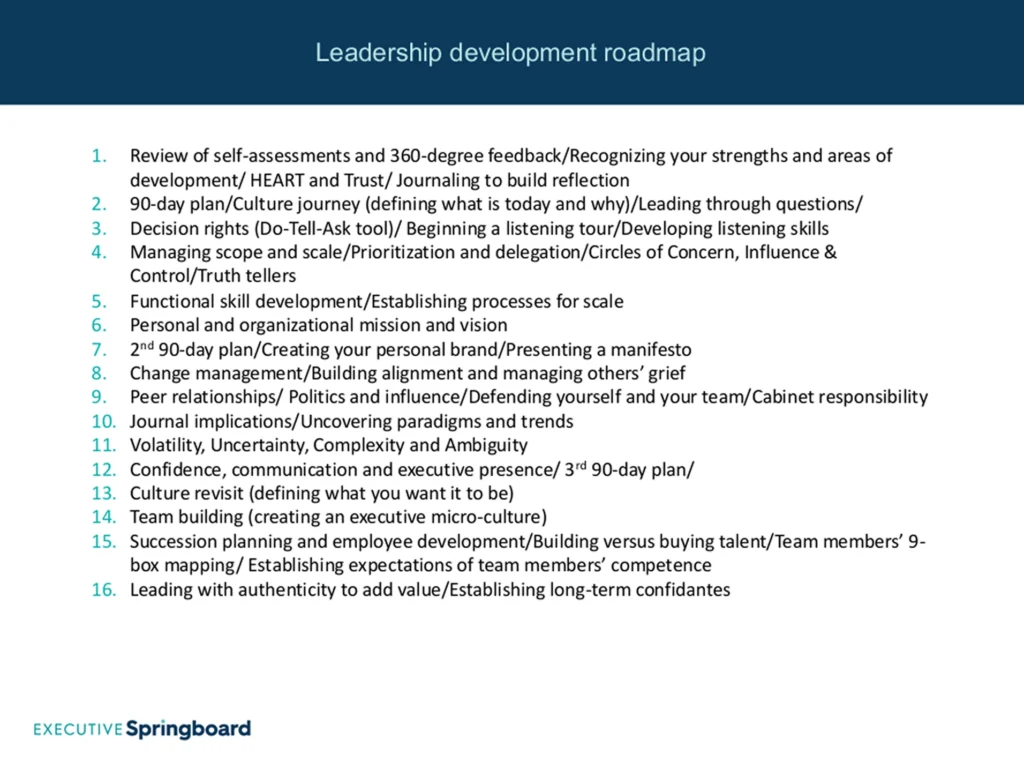
Once awareness sharpens, authority becomes visible. Through DO TELL ASK, leaders see where decision rights blur execution. Too much telling reduces ownership. Too much asking delays action. The balance matters.
The Listening Tour deepens this shift. Leaders listen without correcting or defending. Information quality improves immediately.
As scale increases, Managing Scope and Scale helps leaders stop chasing noise. The Truth Teller concept formalizes candor. Leaders no longer rely on filtered updates.
Impact
Decisions become clearer, faster, and better informed.
From Personal Effort to Organizational Capability
Many executives still lead as operators long after their role demands architecture. The session on Working on the Business exposes this tension. Leaders see how personal involvement limits team growth. Delegation becomes strategic rather than reactive.
This prepares the ground for Discovering True North. When personal mission aligns with organizational purpose, leaders let go more easily. The Golden Circle anchors decisions in meaning rather than urgency.
The work deepens with Personal Brand, the Second 90-Day Plan, and the Manifesto. Leaders align how they intend to lead with how they are experienced. Standards become visible. Expectations stabilize.
Impact
Leadership capacity multiplies. Teams step up. Bottlenecks fade.
Leading People Through Change, Not Around It
Change tests leadership maturity. In Leading Change and Coaching Through Transition, executives learn that structural change moves faster than human adjustment. Resistance is reframed as unresolved transition, not defiance. Leaders coach rather than push.
Power dynamics surface next in Politics, Peer Relationships, and Cabinet Responsibility. Leaders learn to engage peers directly without escalation. Debate stays private. Alignment stays public.
Then the pace slows intentionally. Paradigms and Journal Review reveal thinking patterns leaders did not realize they repeat. Assumptions loosen. Flexibility grows.
Impact
Executives influence without forcing and navigate complexity with fewer blind spots.
Presence When Certainty Disappears
As ambiguity rises, behavior matters more than words. The VUCA session focuses on emotional signals under pressure. Leaders learn to recognize how their reactions amplify or calm the organization.
Confidence, Communication, and Executive Presence refine this further. The Goldilocks Position helps leaders balance conviction with openness. Language sharpens. Presence steadies.
Impact
Teams mirror calm leadership instead of amplifying stress.
Stewardship Beyond the Individual Leader
At this stage,
leadership expands outward. Leading Cultural Change replaces slogans with behavior. Leaders define non-negotiables and confront inconsistency. Credibility returns through action.
Team-Building and Microcultures examine executive team effectiveness using the Six Conditions of Team Success. Leaders see how meetings, trust, and decision norms quietly shape outcomes.
Succession Planning and Talent Decisions move responsibility forward in time. Using 9-Box Talent Mapping, leaders reduce risk and build continuity rather than reacting to vacancies.
Impact
Culture strengthens, teams align, and leadership continuity improves.
Leadership That Continues After the Sessions End
The journey closes with Authenticity and Long-Term Confidantes. Authenticity is treated as discipline, not disclosure. Leaders build a personal circle of trusted challengers who protect judgment over time. Mentoring evolves from structure into sustained leadership maturity.
Impact
Growth continues without dependency.