

Resilience in Leadership: Building Strength That Holds Under Pressure
|
-- Days
:
-- Hours
:
-- Mins
:
-- Secs
Reserve Your Seat →

Postcard from Florida: Turtles and new employees

florida turtules

I am finishing up 6 weeks in my “winter office” on Cape San Blas, Florida. Coming down here used to be a physical necessity when we lived in Minnesota. We would get street cred by surviving a -20 degree temperature and head south. Now, we live in Maryland, but there is still a spiritual renewal that comes from being here.

One of the first signs you encounter when driving onto the cape cautions about the turtle nesting season. Visitors and residents are asked to keep their lights off on the beach from May to September to protect turtle nesting areas.

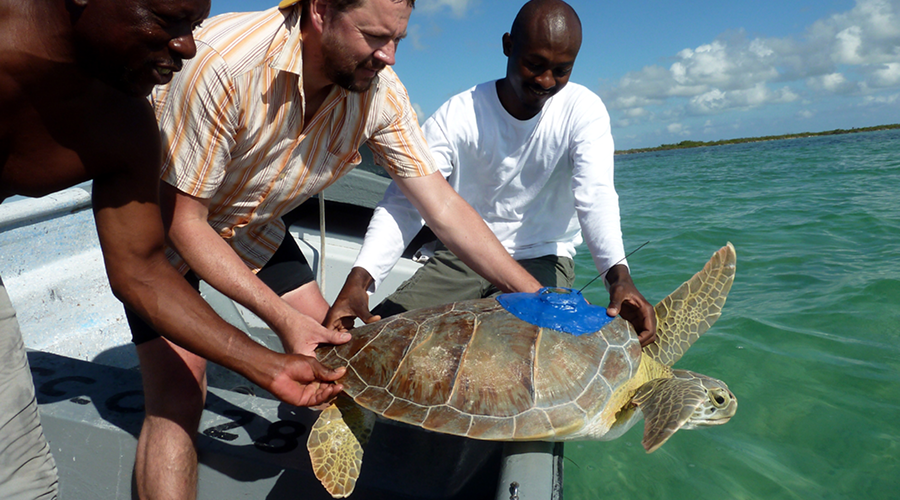
Since the era of dinosaurs, female loggerhead turtles have left the Gulf of Mexico, pulled themselves up on the beach above the high-water line and started digging. They dig about a foot and a half into the sand. They deposit over 100 golf-ball sized eggs and gently cover them up. Exhausted, they make their way back to the sea, never to see their brood again. But they are not done laying eggs, creating 3-5 clutches of eggs between May and September (NOAA).

The eggs take 45-55 days to incubate. Less than 10% hatch. The rest will be dug up by hungry raccoons, crabs, gulls or unthinking humans. Once hatched, it might take the baby turtle a week to work its way to the sand’s surface.

At night, in an activity that looks like a pot of boiling water, hatchlings emerge from the sand en masse. Then they scoot down the slope of the beach, using the greater light intensity from reflections of the moon and stars on the water of the Gulf as a beacon.

Research by at Florida Atlantic University found that 8% of the hatchlings never make it the short distance to the water. They run the gauntlet of mammals and birds, who may be overwhelmed by the large number of “turtle boil” hatchlings dashing for the surf. The baby Loggerheads dive into a wave and ride the undertow out to sea.

After entering the Gulf, the tiny turtles are seldom seen for the next few years. Most experts believe they spend their first few years out in the ocean, riding currents, hiding in seaweed where they can find food. The hazards remain great. The turtles are dinner for predators or ingest plastics and other man-made substances that can prove fatal. All told, the odds that a turtle that makes it to the see will survive to sexual maturity are estimated at less than 1 in 1000.

While the numbers don’t look the same for executives in their business careers, the pattern is similar. There is a job selection process that is probably crueler than natural selection, with one candidate making it out of a couple hundred who applied or were considered.

A small number might be rejected in the assessment or reference check phase. Having cleared the terrestrial predators, it’s off to sea for the new hire, where a new set of threats await.

Our corporate hatchling faces an organization that might be passive-aggressive or openly opposed to the change the executive represents. They are invariably compared to the person they’ve replaced. They need to avoid destructive territorial conflicts with colleagues more adept at the local rules of engagement. They need allies; unlike the turtles that find safety in numbers, the employee is generally all alone. And they have a job to do.

We humans have some significant advantages over sea turtles when it comes to our survival. A reptilian approach is based on starting off with huge numbers to overcome daunting odds. Mammals, and humans in particular, don’t start out with hundreds of siblings; instead, we’ve found ways of increasing the odds of survival in our favor. We have mothers. We have mentors. We develop friendships and communities that are generally based on more than just mating. We are nurtured. We find affiliation. We have social mechanisms that improve our effectiveness.

So, why does Homo Sapiens run into trouble when becoming Homo Newemployee? Why do half of senior hires fail in the first 18 months? Because the same social mechanisms in organizations that improve our effectiveness are selectively permeable. Sometimes you’re let in. Other times, you remain an outsider. Or, going back to our Loggerhead turtle analogy, the workplace can be a harsh environment, especially when you’re on your own, when there is no sargasso to hide behind.

Organizations must improve the chances that their new hires will succeed. They must create a process that assimilates new executives rather than leaving them to dive under a wave, ride the undertow and hope instinct and favorable currents will suffice. They can provide coaching and mentoring resources that help avoid mistakes. And they can attempt to create a culture that is open to the contributions of newcomers, instead of picking them off on the beach.

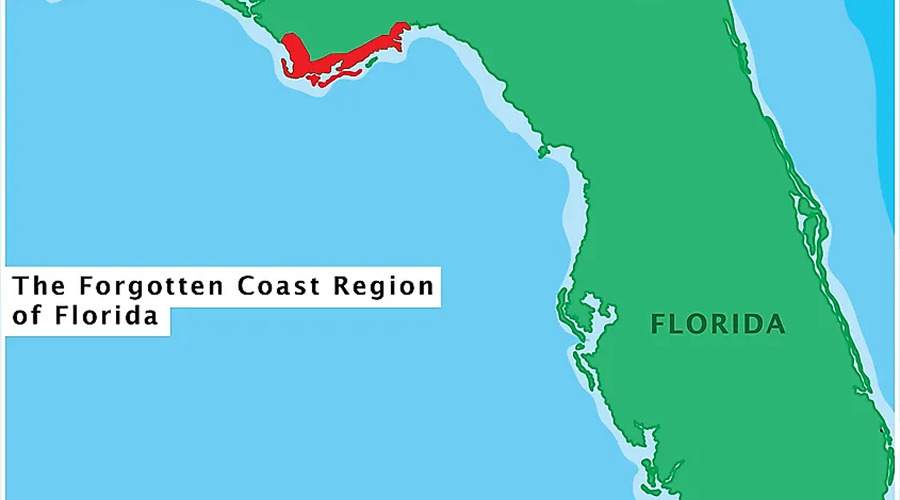
Postcard from Florida The Forgotten Coast

We are spending our 12th February on Florida’s Forgotten Coast. The story goes that it got this moniker because it was once left off a map of Florida. It’s an area of breathtaking beauty and little development. Franklin County has one fully functioning traffic signal, a couple blocks up from the Apalachicola Piggly Wiggly grocery story. You gotta love it!

When Hurricane Michael made landfall as a Category 5 storm in 2018, the destruction was devastating. Fortunately, the human toll was minor, because, well, not a lot of people live here. But the clapboard beach shacks of Mexico Beach were flattened, and they have been replaced by concrete fortresses built to withstand climate change’s fury. Not quite the same vibe as pre-Michael!

Benign neglect might be a magnet for the few people like me who value solitude, wildlife and a dazzling view of the Milky Way. Most people prefer the company of others and the services that support comes with it. Benign neglect is not a good strategy for social inventions like communities and companies. Maintenance, improvement and investment are needed. And for employees, neglect doesn’t feel too benign.

Which gets me to the point of this brief reflection. Forgetting about developing your people until a crisis hits is not a great way to run a business. Not everybody wants to live on a forgotten coast. A critical aspect of employee satisfaction is a sense of opportunity, that they can grow along with the business. They seek feedback. They want a plan. And they hope that it doesn’t take a Category 5 emergency for you to make an investment in them.
Postcard from Florida The Forgotten Coast 1

Leadership lessons from the Iron Lady for modern executives

In 1994, Margaret Thatcher spoke about her memoir The Downing Street Years to a packed ballroom in Toronto. I was in the audience, along with my Gilbey Canada executive committee colleagues.


Quick…. when you hear Margaret Thatcher’s name, what comes to mind? Maybe who she was. Maybe what she did. She has a long list of accomplishments. What is interesting is that she intentionally took a path of memorializing just a few of them.


That morning in Toronto, Mrs. Thatcher framed her remarks by mentioning the four great issues facing the UK when she took over as Prime Minister in 1979: restricting the power of trade unions, controlling inflation, civil service reform and confronting the unrest in Northern Ireland. I leaned over to my boss and whispered, “Wouldn’t it be great if our business only had four problems?”


That speech is something I often return to, over 30 years after I heard it. In a wildly chaotic time with responsibility over 55 million souls, she was able to simplify her situation to a handful of problems to address.


Let’s be clear. Thatcher knew there were more winds buffeting her than these four things. But she was able to close out the noise of other exigencies and focus on the critical few. I’ve heard this echoed in different ways over the years. At its heart, strategy is about sacrifice. Becoming more senior in a role means an increase in scope, scale and complexity. It means leaving important matters to others, so you can focus on yet more important matters.


Here is a useful discipline to apply. What should be the epitaph for your job? When you leave your position, what will your tombstone say? What is the single accomplishment you will be known for? Yes, Thatcher had four objectives, but she was running a country, after all.


I will make it easier for you. You don’t have to be known for only one thing for your entire career, like inventing the lightbulb or writing the national anthem or electrifying the auto industry or bringing design to technology. No. Just come up with one thing for this job. Maybe it’s integrating an acquisition on time and on budget for the first time in your company’s history. Or bringing forward a digital transformation that changes how your work gets done. What does that say about where you spend your time and effort? And all the other things in your purview? How much effort goes into the things you won’t be remembered for?


I will make it easier still. Once you’ve accomplished that one thing you’ll be known for, come up with something better. So, more than one priority, just not at the same time. Because, if you don’t try to top your own record, you’re on a sad glide path.


Most of us don’t stay in the same role for forty years. Imagine having a career with 10-20 roles, each with a single significant accomplishment. What a great resume that would be!


I return to Margaret Thatcher to close. In her Downing Street tenure from 1979 to 1990, she became known for more than her four stated priorities. She conquered some of the original goals. Other times, new situations rose to the top. She led the UK to victory in the Falklands. She was an axis point along with Ronald Reagan for transatlantic conservatism. She helped steel George H.W. Bush’s spine in the Gulf War. And she was Britain’s first female Prime Minister. But the lesson we can all take from this remarkable individual is her remarkable focus, a focus we can try to emulate.

Leadership mentoring guidance for senior leaders

Yale University suggests four good questions that people seeking career development should ask, as they consider choosing a mentor. In response, I offer how Executive Springboard operationalizes each.

Do I Look Up to This Person?

We recruit accomplished leaders as mentors. We want executives to look at our mentors’ resumes and understand how they can learn from them.

We initially sought mentors who had at least a half-dozen years of experience as an officer in Fortune 500 companies. As our business expanded and our client base included smaller companies, so has the diversity of our mentor network. An Integrator in a $10M manufacturing company may be better served by a mentor who has succeeded in small businesses like theirs. We strive to provide shared experience, so an executive feels like their mentor has faced the situation they are in.

Traditionally, mentors are older than their mentee, but this is not always the case. It is important that a mentor has experience and expertise in an area of importance to the mentee. A Gen X manager who wants to understand their Gen Z customers or employees might seek a “reverse mentor” from that cohort. Executive Springboard has extended its mentor network into Millennials, and we strive to offer executives relevant choices among our mentors.

As successful as our mentors have been in their careers, it’s important that they are generous enough to willingly share their failures. I am not sure what benefit a mentee gets from somebody who spends an hour regaling them in their successes. The hardest thing about learning to ride a bike is the pavement. We learn from failure. But it is a little less painful if we can learn from somebody else’s mistakes. I think this is critical to looking up to that person.

Am I Able to Work Well With This Person?

Our vetting process involves interviews to determine whether a potential mentor is a great active listener. Active listening is a key skill in executive coaching, and about 25% of our mentors have coaching certification. But whether they are certified or not, they must impress me with how they follow a conversation, seek to understand, probe before reaching conclusions and evaluate another’s state of mind. Before the meter is running, we have a get-acquainted session between mentor and mentee. If you don’t feel a connection, if rapport is not being established early on, you might want to try another mentor.

Rapport is a two-way street. If a mentor is concerned that their mentee is not being transparent, I counsel them to tell the mentee that they don’t believe this will be a valuable experience and why. It might be a short engagement for us, but hopefully the feedback is enough to jar an executive into a more constructive relationship in the future.

The pandemic has made our video mentoring model better accepted. Some people find that nothing beats face-to-face. I like to think of a zoom call as face-to-face, just in two dimensions instead of three. For us, Zoom or Google Meet calls work well for several reasons. First, as our mentors are paid for their time, what looks attractive as an hourly rate becomes less so if they have to commute. Second, the best fit for a leader in Ann Arbor might be with a mentor in Austin. Third, video is superior to phone calls because there is no multitasking and non-verbal cues can be read.

I’ve already mentioned mentors having to be willing to share their failures. Executive Springboard mentor Brigid Bonner referred to this as “showing my scars.” When a mentor makes themself vulnerable, it invites the mentee to follow suit. This is when the good stuff happens. Part of our process is a strict code of confidentiality. What gets said in mentoring sessions doesn’t go back to the employer, even though they might be paying for this effort. We created mechanisms for the executive to evaluate their company’s return on the mentoring investment, but a strong mentoring relationship must follow Las Vegas rules.

Can This Person Guide Me Toward My Professional Goals?

Many people find mentors within their organizations. They have the benefit of knowing the culture and the people. They can advise on who will help them and who might take advantage of them.

An external mentor can’t do that well. But the outside resource asks questions or makes suggestions that lead an executive on their own path of discovery, and that journey can be more valuable than heavy-handed advice from within.

Executive Springboard mentors use a toolkit for leadership development, so the experience from one mentee to the next has a level of consistency. The toolkit is delivered as pre-work for each session. The point is to get executives thinking about issues at roughly the same time in their development. But there is no obligation to discuss the pre-work in the mentoring session. What carries the day in the discussion is what is on the mentee’s mind; they guide the process.

Is This Person Happy in His or Her Career?

This question caught me off guard a little bit. I had not thought of loving your job as a prerequisite for being a good mentor. And many people credit mentors with a perspective to leave toxic or dead-end positions for new opportunities. But it certainly helps if a mentor is in a positive state of mind.

As Executive Springboard became better known, leaders with highly impressive backgrounds sought us out, to join as mentors. About 25% of our mentors are still in their leadership positions. The rest have left corporate life, choosing consulting, board work, investing or retirement. Among other things, mentoring is how they give back, and they are passionate about that opportunity.

We are proud of the very strong Net Promoter Scores we have received in our mentoring work. I don’t ask mentors for the same formal feedback I receive from mentees; anecdotally, I think their experience as a mentor is at least as positive. So, I am confident in saying that Executive Springboard mentors led rewarding careers and love the opportunity to provide a legacy to the next generation of leaders.

FREQUENTLY ASKED QUESTIONS

You should ask whether you look up to the mentor, can work well with them, if they can guide you toward your goals, and whether they are satisfied in their own career.
Admiration creates trust and motivation. When you respect a mentor’s experience and values, you are more likely to learn from their guidance and apply it effectively.
A good fit is reflected through strong rapport, open communication, active listening, and mutual trust. An initial meeting can help determine compatibility.
An external mentor provides an unbiased perspective, encourages independent thinking, and helps you discover solutions without internal organizational bias.

    Need Any Help?