
Lessons from the Iron Lady

Leadership lessons from the Iron Lady for modern executives

Leadership lessons from the Iron Lady for modern executives

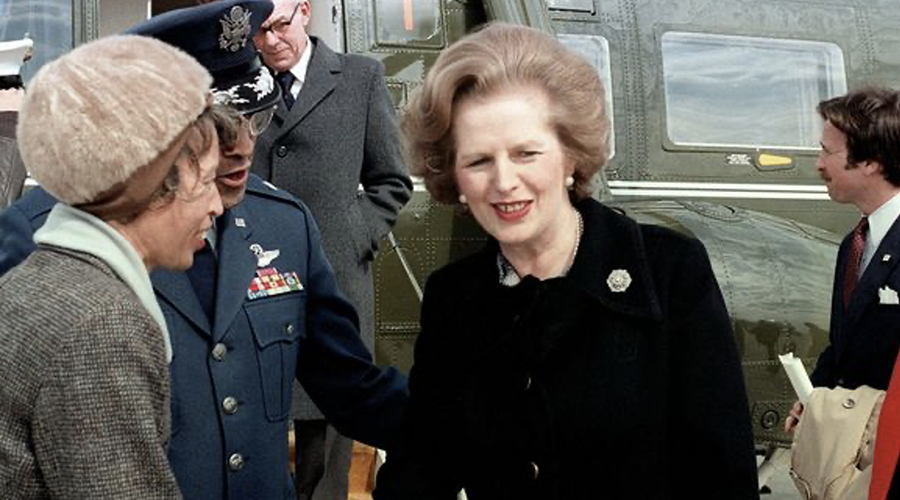
In 1994, Margaret Thatcher spoke about her memoir The Downing Street Years to a packed ballroom in Toronto. I was in the audience, along with my Gilbey Canada executive committee colleagues.

What Comes to Mind When You Think of Margaret Thatcher?

Quick…. when you hear Margaret Thatcher’s name, what comes to mind? Maybe who she was. Maybe what she did. She has a long list of accomplishments. What is interesting is that she intentionally took a path of memorializing just a few of them.

Simplifying Complex Leadership Challenges

That morning in Toronto, Mrs. Thatcher framed her remarks by mentioning the four great issues facing the UK when she took over as Prime Minister in 1979: restricting the power of trade unions, controlling inflation, civil service reform and confronting the unrest in Northern Ireland. I leaned over to my boss and whispered, “Wouldn’t it be great if our business only had four problems?”

The Power of Focus in Leadership

That speech is something I often return to, over 30 years after I heard it. In a wildly chaotic time with responsibility over 55 million souls, she was able to simplify her situation to a handful of problems to address.

Strategy is About Sacrifice

Let’s be clear. Thatcher knew there were more winds buffeting her than these four things. But she was able to close out the noise of other exigencies and focus on the critical few. I’ve heard this echoed in different ways over the years. At its heart, strategy is about sacrifice. Becoming more senior in a role means an increase in scope, scale and complexity. It means leaving important matters to others, so you can focus on yet more important matters.

Defining Your Leadership Legacy

What Should Be the Epitaph for Your Job?

Here is a useful discipline to apply. What should be the epitaph for your job? When you leave your position, what will your tombstone say? What is the single accomplishment you will be known for? Yes, Thatcher had four objectives, but she was running a country, after all.

One Role, One Meaningful Achievement

I will make it easier for you. You don’t have to be known for only one thing for your entire career, like inventing the lightbulb or writing the national anthem or electrifying the auto industry or bringing design to technology. No. Just come up with one thing for this job. Maybe it’s integrating an acquisition on time and on budget for the first time in your company’s history. Or bringing forward a digital transformation that changes how your work gets done. What does that say about where you spend your time and effort? And all the other things in your purview? How much effort goes into the things you won’t be remembered for?

Continuous Growth and Raising the Bar

I will make it easier still. Once you’ve accomplished that one thing you’ll be known for, come up with something better. So, more than one priority, just not at the same time. Because, if you don’t try to top your own record, you’re on a sad glide path.

Building a Career of Impact

Most of us don’t stay in the same role for forty years. Imagine having a career with 10-20 roles, each with a single significant accomplishment. What a great resume that would be!

Final Reflection on Margaret Thatcher’s Leadership

I return to Margaret Thatcher to close. In her Downing Street tenure from 1979 to 1990, she became known for more than her four stated priorities. She conquered some of the original goals. Other times, new situations rose to the top. She led the UK to victory in the Falklands. She was an axis point along with Ronald Reagan for transatlantic conservatism. She helped steel George H. W. Bush’s spine in the Gulf War. And she was Britain’s first female Prime Minister. But the lesson we can all take from this remarkable individual is her remarkable focus, a focus we can try to emulate.


FREQUENTLY ASKED QUESTIONS

The key lesson is the power of focus. Thatcher demonstrated that even in complex situations, leaders must prioritize a few critical issues instead of trying to solve everything at once.

Focusing on fewer priorities allows leaders to allocate time, energy, and resources effectively. It reduces distractions and increases the likelihood of achieving meaningful results.

Leaders can define their legacy by identifying one key accomplishment they want to be known for in a role and aligning their efforts toward achieving it.

It means that leaders must consciously choose what not to focus on. By letting go of less critical tasks, they can dedicate more attention to high-impact priorities.

Leadership mentoring guidance for senior leaders

Yale University suggests four good questions that people seeking career development should ask, as they consider choosing a mentor. In response, I offer how Executive Springboard operationalizes each.

Do I Look Up to This Person?

We recruit accomplished leaders as mentors. We want executives to look at our mentors’ resumes and understand how they can learn from them.

We initially sought mentors who had at least a half-dozen years of experience as an officer in Fortune 500 companies. As our business expanded and our client base included smaller companies, so has the diversity of our mentor network. An Integrator in a $10M manufacturing company may be better served by a mentor who has succeeded in small businesses like theirs. We strive to provide shared experience, so an executive feels like their mentor has faced the situation they are in.

Traditionally, mentors are older than their mentee, but this is not always the case. It is important that a mentor has experience and expertise in an area of importance to the mentee. A Gen X manager who wants to understand their Gen Z customers or employees might seek a “reverse mentor” from that cohort. Executive Springboard has extended its mentor network into Millennials, and we strive to offer executives relevant choices among our mentors.

As successful as our mentors have been in their careers, it’s important that they are generous enough to willingly share their failures. I am not sure what benefit a mentee gets from somebody who spends an hour regaling them in their successes. The hardest thing about learning to ride a bike is the pavement. We learn from failure. But it is a little less painful if we can learn from somebody else’s mistakes. I think this is critical to looking up to that person.

Am I Able to Work Well With This Person?

Our vetting process involves interviews to determine whether a potential mentor is a great active listener. Active listening is a key skill in executive coaching, and about 25% of our mentors have coaching certification. But whether they are certified or not, they must impress me with how they follow a conversation, seek to understand, probe before reaching conclusions and evaluate another’s state of mind. Before the meter is running, we have a get-acquainted session between mentor and mentee. If you don’t feel a connection, if rapport is not being established early on, you might want to try another mentor.

Rapport is a two-way street. If a mentor is concerned that their mentee is not being transparent, I counsel them to tell the mentee that they don’t believe this will be a valuable experience and why. It might be a short engagement for us, but hopefully the feedback is enough to jar an executive into a more constructive relationship in the future.

The pandemic has made our video mentoring model better accepted. Some people find that nothing beats face-to-face. I like to think of a zoom call as face-to-face, just in two dimensions instead of three. For us, Zoom or Google Meet calls work well for several reasons. First, as our mentors are paid for their time, what looks attractive as an hourly rate becomes less so if they have to commute. Second, the best fit for a leader in Ann Arbor might be with a mentor in Austin. Third, video is superior to phone calls because there is no multitasking and non-verbal cues can be read.

I’ve already mentioned mentors having to be willing to share their failures. Executive Springboard mentor Brigid Bonner referred to this as “showing my scars.” When a mentor makes themself vulnerable, it invites the mentee to follow suit. This is when the good stuff happens. Part of our process is a strict code of confidentiality. What gets said in mentoring sessions doesn’t go back to the employer, even though they might be paying for this effort. We created mechanisms for the executive to evaluate their company’s return on the mentoring investment, but a strong mentoring relationship must follow Las Vegas rules.

Can This Person Guide Me Toward My Professional Goals?

Many people find mentors within their organizations. They have the benefit of knowing the culture and the people. They can advise on who will help them and who might take advantage of them.

An external mentor can’t do that well. But the outside resource asks questions or makes suggestions that lead an executive on their own path of discovery, and that journey can be more valuable than heavy-handed advice from within.

Executive Springboard mentors use a toolkit for leadership development, so the experience from one mentee to the next has a level of consistency. The toolkit is delivered as pre-work for each session. The point is to get executives thinking about issues at roughly the same time in their development. But there is no obligation to discuss the pre-work in the mentoring session. What carries the day in the discussion is what is on the mentee’s mind; they guide the process.

Is This Person Happy in His or Her Career?

This question caught me off guard a little bit. I had not thought of loving your job as a prerequisite for being a good mentor. And many people credit mentors with a perspective to leave toxic or dead-end positions for new opportunities. But it certainly helps if a mentor is in a positive state of mind.

As Executive Springboard became better known, leaders with highly impressive backgrounds sought us out, to join as mentors. About 25% of our mentors are still in their leadership positions. The rest have left corporate life, choosing consulting, board work, investing or retirement. Among other things, mentoring is how they give back, and they are passionate about that opportunity.

We are proud of the very strong Net Promoter Scores we have received in our mentoring work. I don’t ask mentors for the same formal feedback I receive from mentees; anecdotally, I think their experience as a mentor is at least as positive. So, I am confident in saying that Executive Springboard mentors led rewarding careers and love the opportunity to provide a legacy to the next generation of leaders.

FREQUENTLY ASKED QUESTIONS

You should ask whether you look up to the mentor, can work well with them, if they can guide you toward your goals, and whether they are satisfied in their own career.
Admiration creates trust and motivation. When you respect a mentor’s experience and values, you are more likely to learn from their guidance and apply it effectively.
A good fit is reflected through strong rapport, open communication, active listening, and mutual trust. An initial meeting can help determine compatibility.
An external mentor provides an unbiased perspective, encourages independent thinking, and helps you discover solutions without internal organizational bias.

executive midlife crisis

I recently had a conversation with a Sr Dir of HR at Medtronic. She has a lot of admiration for her employer. I do too. So, when she told me that some of the internal coaching she does is with executives who are questioning what they are doing with their careers, it gave me pause.

Consider this a long-haul symptom of the pandemic. The time away from the office and a break in a years-long routine had led to employees breaking free from habit and into self-reflection. The result has been a tsunami of executive midlife crises.

I wrote about the Great Resignation just last month. Part of it is a function of demographics. As Boomers reached an age where retirement became an attractive option, they were bound to leave the job market. Part of it is a result of healthy 401-Ks, as stocks have rocketed in the past year.

But there are other things going on. Employees between 30 and 45 years old have seen a 20% increase in resignations year on year. Women in this age range are more likely to be leaving. Their work experiences tend to be less satisfying than men’s. They are often in the front-line jobs of healthcare and education that saw stress accelerate the most during COVID. And they felt the joys and obligations of family life most acutely, with their children at home.

Now, add factors like reaching the midpoint of your working career, working from the echo chamber of a home office, an organizational pyramid that narrows career options with your current employer and a glimpse of your own mortality, as the COVID death toll approaches 800K Americans. You have the building blocks for a midlife crisis. And it is touching a large number of corporate executives.

Somehow, this feels different from what we traditionally think of as a midlife crisis. There is far less of the typical selfishness, maybe because selfish outlets were closed down for so long. You can’t get a facelift if clinics are not accepting elective surgery. Having an affair is far less exciting via Zoom. Instead, we are reacting to racial tensions, income inequality, polarizing politics and threats to our way of life from human-induced acts of God. Freud is taking a back seat to Frankl.

In the New Yorker, Lizzie Widdicombe interviewed some marketing executives: “We’re reconsidering who we are, what we care about, what we want to do with our time. I’m sitting here writing pitches for big-box retailers on how they can sell more products that people don’t need.”

Having identified this crisis, what can we do about it? I’m going to stop short of suggesting a radical change, whether it is in your career or your whole life. There are four things you can do that can make a difference in how you feel, how you feel about yourself, your work and your relationships. They may shed light on a way out of your crisis, or they might show just how needed a fundamental change is.

  • Keep a journal. This is advice that I give to all of Executive Springboard’s mentees. At a minimum, journaling helps you reflect on what is happening to yourself and to those around you. It can also be an outlet for identifying emotions that you have suppressed.
  • Reconnect with a higher purpose. Are there things you are passionate about but stopped devoting time to them? Re-engage! Are there aspects of your work that link with your personal mission? Dive in! Is your career getting in the way of what you find important? Find a way to contribute, either outside of work or through a more satisfying job.
  • Embrace discovery. Try new things. Find joy in learning. Open yourself to knowledge that can come from unexpected places. Maybe it is being mentored by somebody junior than yourself. Maybe it is taking a new route to a familiar destination, trying as new recipe, listening to new music or vacationing someplace you’ve never been before. Enjoy experimentation, especially when it fails.
  • Take care of your physical health. A critical part to ensuring that a crisis becomes a positive turning point is to make improvements in your physical wellbeing. Whether it’s getting enough quality sleep, exercise, diet.

Suppose you are not in the throes of a midcareer crisis, but you are responsible for people experiencing this. You don’t want to lose valuable people by having them become additional Great Resignation data points. And you don’t want them in limbo, limping through their crises, working at less than full speed, bringing down co-workers. What can you do about it?

  • Get a pulse on how your people are feeling. I’m not talking about employee engagement surveys, though they certainly have their place. Instead of aggregate metrics, it’s important to get to an individual level. Start with the assumption that, over the past year, everybody has been dealing with significant emotional difficulties. Probe on where there may be issues, which if not addressed, can be unhealthy for the individual and the company.
  • Find ways to offer individualized support. The needs are different, and so are the solutions. Some people would benefit from a coach or mentor. Common issues might be addressed through a sense of community, within your organization or associated with outside groups. Others need to develop their own individual plans for resolution. Some organizations have succeeded by providing people with sabbaticals.
  • Operationalize your mission. Hopefully, you have a reason for being that goes beyond providing shareholder value. If your business has articulated a mission or purpose that can motivate employees to get out of bed in the morning, create ways for your people to get involved. This connects them to a higher purpose. It connects them to their colleagues and the community. And it enhances their connection to the company.
  • Be prepared to lose people. Some managers will find a new career opportunity the inevitable result of the crisis they face. It feels like a failure when valuable people leave. In truth it is part of growth, for them and for you. The respect and compassion you show employees struggling through a critical personal and professional time pays dividends. It enhances your brand, builds respect and loyalty among remaining employees and may add intentionality to your succession plans.

When it comes to addressing a career crisis, there is no such thing as benign neglect. Ignoring the problem doesn’t make it go away. Tackle it head-on. Provide time for reflection. Recognize that changes, though not inevitable, might be for the best.

FREQUENTLY ASKED QUESTIONS

The rise in executive midlife crises is largely driven by the pandemic, which disrupted routines and encouraged self-reflection. Additional factors include career stagnation, remote work isolation, personal life pressures, and increased awareness of mortality, all of which have led professionals to question their career paths and purpose.
The Great Resignation is closely linked to career reflection, as many employees used the pandemic period to reassess their priorities. Factors such as financial stability, job dissatisfaction, and a desire for meaningful work have contributed to increased resignations, especially among mid-career professionals.
Effective ways to manage a midcareer crisis include journaling for self-reflection, reconnecting with personal purpose, trying new experiences, and focusing on physical health. These steps help individuals gain clarity, improve well-being, and make more informed career decisions.
Leaders can support employees by understanding their emotional challenges, offering personalized support such as coaching or mentorship, aligning work with organizational purpose, and being open to employee transitions. A compassionate and proactive approach helps retain talent and maintain productivity.

Illustration of a collaborative C-suite executive leadership

Executive Springboard mentor John Keppeler shared an anecdote from his first time leading a company’s sales function. It was at CNS, the company that made Breathe Right nasal strips. Its CEO, Marti Morfitt, told John, “You are a really good sales guy. Learn what it takes to contribute to a cross-functional management team. Don’t be afraid of getting out of your lane.”

It happens all the time in the work we do with executives. A mentor is selected on the basis of shared experience, functional and otherwise. The mentor and mentee speak the same language. The mentor’s experience is relevant to the situations the executive faces. But the conversations are seldom about being a better CFO or CIO; they are about becoming a valued member of a leadership team.

Gaurav Lahiri, Jeff Schwartz, and Erica Volini of Deloitte wrote about the symphonic C-suite in 2018. Their notion was that the future of C-suites would be “specialized experts playing in harmony – instead of a cacophony of experts who sound great alone, but not together.” At the time, it seemed like an aspirational model; egos and turf protection were defining characteristics of many leadership teams that collaborated in crises but were often dysfunctional.

Our hopes for a symphonic C-suite were that it could better serve the expanding, increasingly complicated goals of organizations. The marketplace has become a driver of social progress. Employees increasingly seek meaning in their work. Large companies are looking for how they can address global challenges like decarbonization. These new social purposes require cross-functional collaboration. Sometimes this involves the whole C-suite; other times it might require the heads of marketing, supply chain and IT to work on digital solutions or the CHRO and CFO to work through equity issues.

COVID’s impact on symphonic progress was inconsistent. Some teams pulled together, using technology to work better remotely. Others reverted to individual survival strategies, and teamwork suffered.

Now, we begin to glimpse a post-COVID world. We’ve learned just how much a motivated workforce can adapt in real time. There is optimism that demand will be take a leap forward, and we will function less in survival mode. The big issues beyond shareholder value that we want to tackle are still ahead of us. We are heading towards a hybrid office that offers the best of both worlds of independent work at home and the return of face-to-face collaboration. What happens now?
  • 1. Leaders have to get whole. Mental health issues have hit the C-suite harder than the rest of the employee base. Their ability work collectively will suffer if they are still suffering as individuals.
  • 2. Members of the C-suite need to follow Ms. Morfitt’s advice and learn to get out of their own lane. This might be working closely in subgroups or contributing to the function of the larger C-suite.
  • 3. C-suite members have the opportunity to provide situational leadership with the peers, when their expertise is valuable to the entire team. For instance, Chief Sales Officers have been able to leverage their experience leading a distributed work force, to the benefit of their peers during COVID.
  • 4. The CEO and CHRO should assume conductor roles, enabling their colleagues to form bonds of collaboration. Interpersonal tension never goes away, but people need to establish positive working relationships to common goals.
  • 4. The leadership team needs to create its own micro-culture of how members will interact. Values like assumption of positive intent and cabinet responsibility should be established to facilitate teamwork.
  • 5. Incentive systems should cascade from common corporate objectives, so functional leaders don’t find themselves at cross-purposes with their colleagues.
  • 6. Senior execs can create capacity by nurturing their reports’ development in functional leadership. In the process, they groom the C-suite’s next generation.
Corporations are redefining their place in society, and with it the dynamics of the C-suite. Functional expertise might lead to an exec joining the leadership team, but collaboration skills will determine their success in the role.

    Need Any Help?