Interview: Peter Himmelman on creativity

Executive Springboard Peter Himmelman interview

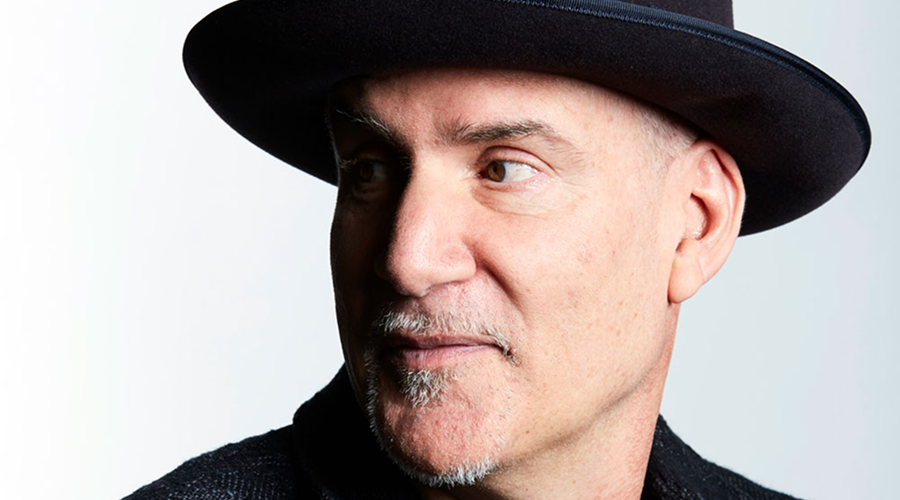
Executive Springboard mentor Peter Himmelman talks about his book, Let me Out: Unlock your Creative Mind and Bring your Ideas to Life. 
leadership lessons for mentoring executives with Executive Springboard

A Lesson Hidden in NFL Pregame Coverage

The NFL football season began this past weekend, and there was an interesting lesson in mentorship buried in the pregame fodder on ESPN.

The relationship between veteran starting quarterbacks and their understudies was explored. Much of this got buried in a bit of a controversy, as headlines read, “Bledsoe Slams Romo,” but more on that later.

Why Mentorship Between QB1 and QB2 Is Challenging

The Structural Problem With Quarterback Mentorship

First off, the dynamics for mentorship between QB1 and QB2 are not ideal. There is little incentive for the starter to help prepare his understudy. In the piece, Brett Favre went so far as to say that mentoring Aaron Rodgers was not part of his job description. Successfully providing guidance and encouragement prepares the back-up to take over your job. In the cruel world of professional football, this often doesn’t happen on your preferred timeframe.

The Business Parallel to NFL Mentorship

Why Managers and Mentors Are Often Different People

In the business world, a manager and a mentor are often different people. The mentor is commonly at least two levels higher in the organization than the mentee, and sometimes they are in a different position altogether, equivalent to a veteran linebacker mentoring a rookie safety. In football, there is not the complication of the junior person reporting to the senior player, but the relationship is characterized by jealousy and insecurity on the part of the mentor and by impatience and ego on the part of the mentee.

Drew Bledsoe’s Career and the Quarterback Transition

From Franchise Quarterback to Replacement

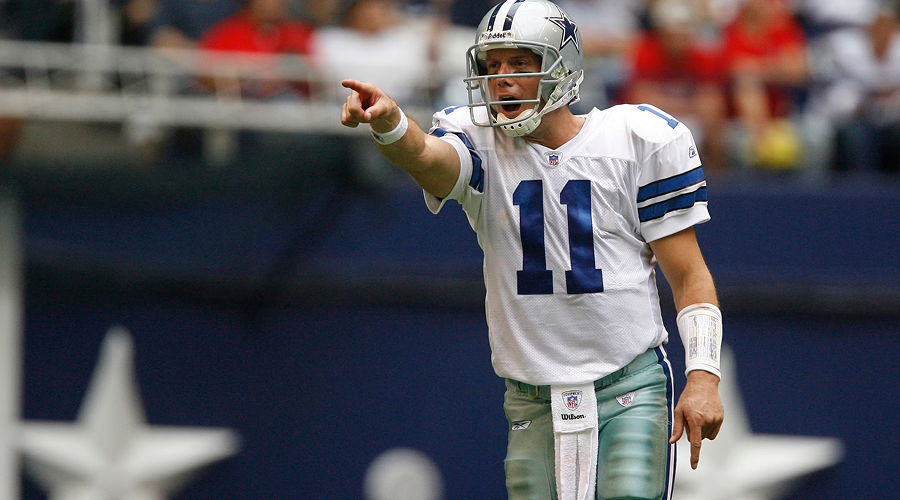
Now on to Drew Bledsoe. After a stellar college career at Washington State University, he was the first selection in the 1993 draft by New England, and he was immediately installed as the starting quarterback. He led the Patriots to two playoff appearances and was rewarded in 2001 with the largest contract in league history, a year after the Patriots drafted a prospect named Tom Brady as his back-up. In the second game of the 2001 season, Bledsoe took a brutal hit and left the game with serious internal bleeding. Brady took over, led the team to its first Super Bowl win and claimed the starting QB role from Bledsoe. Bledsoe spent a couple of years in Buffalo, then to the Dallas Cowboys. In his second year as a starter with the Cowboys, he was benched during a poor performance and was replaced by fourth-year backup, Tony Romo.

Mentoring Brady and Romo

Different Responses to the Same Opportunity

Both Brady and Romo were eager to learn from Drew, knowing he could help them get better. Neither had the draft pedigree that Bledsoe had. Brady was famously drafted in the sixth round; Romo wasn’t drafted at all, being signed by the Cowboys as an undrafted free agent. Bledsoe was interviewed about playing with, and mentoring, Brady and Romo. He referred to Brady as “a sponge,” and “curious, almost annoyingly so. Bledsoe never saw Brady as a threat because he as “soaking up all this information.”

Drew Bledsoe’s Candid Assessment of Tony Romo

When Curiosity Disappears

His comments on Romo were blunt:

“If you’re watching this, Romo, you know this is true. The minute that he became the starter, he became pretty big in his own mind. And he was no longer the curious, inquisitive guy.

“That was the difference between him and Tommy. Tommy became the starter, he still was asking all the questions where all of a sudden Romo was the guy that had all the answers.”

Lessons From the ESPN Segment

What Leaders Can Take Away

A few lessons from the ESPN segment featuring Bledsoe:
  • Not everybody is cut out to be a mentor. Case in point, Brett Favre.
  • The world is richer for mentors who help the next generation, even if they personally pay a price for their contribution.
  • Those who receive mentoring are likely to pass it along. Those who don’t, might not. Case in point, Aaron Rodgers.
  • Greatness comes from continually learning, asking questions, listening.
  • Some of us wrongly think that, when we’ve arrived, there is nothing more we can learn.

A Final Word on Trust in Mentorship

The Fight Club Rule of Mentoring

And, Mr. Bledsoe, while I learned something from your transparency, there is a corollary between mentoring and the first rule of Fight Club. You don’t talk about it without breaking the trust at its foundation!

FREQUENTLY ASKED QUESTIONS

Mentorship between QB1 and QB2 is challenging because the starting quarterback has little incentive to prepare the person most likely to take his job. As highlighted in the ESPN segment, helping a backup succeed often accelerates the starter’s own replacement, which creates natural tension and reluctance to fully mentor.
In both football and business, effective mentorship usually does not occur between direct competitors or direct reporting relationships. Just as managers and mentors are often different people in organizations, mentorship in football works better when there is less insecurity, competition, and risk tied to the relationship.
Drew Bledsoe mentored both Tom Brady and Tony Romo, but he observed a key difference in their approach. Brady remained curious and continued asking questions even after becoming the starter, while Romo, according to Bledsoe, stopped being inquisitive once he secured the starting role.
The segment highlights that not everyone is suited to be a mentor, that true mentors often help others even at personal cost, and that greatness comes from continual learning. It also reinforces the idea that believing you have “arrived” can stop growth, and that trust is a critical foundation of any mentoring relationship.

florida turtules

I am finishing up 6 weeks in my “winter office” on Cape San Blas, Florida. Coming down here used to be a physical necessity when we lived in Minnesota. We would get street cred by surviving a -20 degree temperature and head south. Now, we live in Maryland, but there is still a spiritual renewal that comes from being here.

Loggerhead Turtle Nesting Season on Cape San Blas

One of the first signs you encounter when driving onto the cape cautions about the turtle nesting season. Visitors and residents are asked to keep their lights off on the beach from May to September to protect turtle nesting areas.

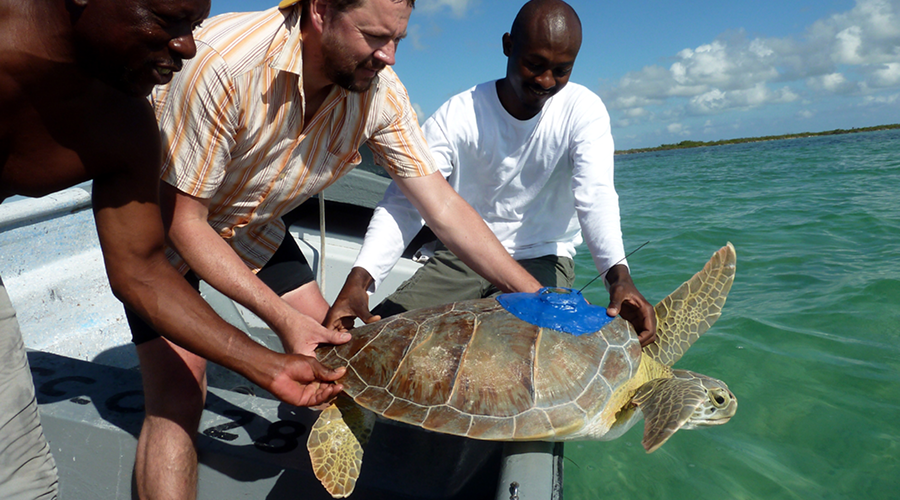
Since the era of dinosaurs, female loggerhead turtles have left the Gulf of Mexico, pulled themselves up on the beach above the high-water line and started digging. They dig about a foot and a half into the sand. They deposit over 100 golf-ball sized eggs and gently cover them up. Exhausted, they make their way back to the sea, never to see their brood again. But they are not done laying eggs, creating 3-5 clutches of eggs between May and September (NOAA).

Hatchling Survival Rates and Ocean Journey

The eggs take 45-55 days to incubate. Less than 10% hatch. The rest will be dug up by hungry raccoons, crabs, gulls or unthinking humans. Once hatched, it might take the baby turtle a week to work its way to the sand’s surface.

At night, in an activity that looks like a pot of boiling water, hatchlings emerge from the sand en masse. Then they scoot down the slope of the beach, using the greater light intensity from reflections of the moon and stars on the water of the Gulf as a beacon.

Research by at Florida Atlantic University found that 8% of the hatchlings never make it the short distance to the water. They run the gauntlet of mammals and birds, who may be overwhelmed by the large number of “turtle boil” hatchlings dashing for the surf. The baby Loggerheads dive into a wave and ride the undertow out to sea.

After entering the Gulf, the tiny turtles are seldom seen for the next few years. Most experts believe they spend their first few years out in the ocean, riding currents, hiding in seaweed where they can find food. The hazards remain great. The turtles are dinner for predators or ingest plastics and other man-made substances that can prove fatal. All told, the odds that a turtle that makes it to the see will survive to sexual maturity are estimated at less than 1 in 1000.

Executive Hiring and Natural Selection: A Powerful Analogy

While the numbers don’t look the same for executives in their business careers, the pattern is similar. There is a job selection process that is probably crueler than natural selection, with one candidate making it out of a couple hundred who applied or were considered.

A small number might be rejected in the assessment or reference check phase. Having cleared the terrestrial predators, it’s off to sea for the new hire, where a new set of threats await.

Challenges of New Employee Onboarding in Organizations

Our corporate hatchling faces an organization that might be passive-aggressive or openly opposed to the change the executive represents. They are invariably compared to the person they’ve replaced. They need to avoid destructive territorial conflicts with colleagues more adept at the local rules of engagement. They need allies; unlike the turtles that find safety in numbers, the employee is generally all alone. And they have a job to do.

Why Human Support Systems Matter in Career Success

We humans have some significant advantages over sea turtles when it comes to our survival. A reptilian approach is based on starting off with huge numbers to overcome daunting odds. Mammals, and humans in particular, don’t start out with hundreds of siblings; instead, we’ve found ways of increasing the odds of survival in our favor. We have mothers. We have mentors. We develop friendships and communities that are generally based on more than just mating. We are nurtured. We find affiliation. We have social mechanisms that improve our effectiveness.

Why New Hires Fail and How Organizations Can Improve

So, why does Homo Sapiens run into trouble when becoming Homo Newemployee? Why do half of senior hires fail in the first 18 months? Because the same social mechanisms in organizations that improve our effectiveness are selectively permeable. Sometimes you’re let in. Other times, you remain an outsider. Or, going back to our Loggerhead turtle analogy, the workplace can be a harsh environment, especially when you’re on your own, when there is no sargasso to hide behind.

Improving Executive Onboarding and Organizational Culture

Organizations must improve the chances that their new hires will succeed. They must create a process that assimilates new executives rather than leaving them to dive under a wave, ride the undertow and hope instinct and favorable currents will suffice. They can provide coaching and mentoring resources that help avoid mistakes. And they can attempt to create a culture that is open to the contributions of newcomers, instead of picking them off on the beach.

FREQUENTLY ASKED QUESTIONS

Cape San Blas provides a crucial nesting habitat for loggerhead turtles, where females lay multiple clutches of eggs between May and September, making it an important conservation area.

Hatchlings face numerous threats, including predators like birds and crabs, human interference, and environmental hazards. Less than 10% hatch, and only a tiny fraction survive to adulthood.

Both involve intense selection processes and high risks. Just as few turtles survive to maturity, only a small percentage of candidates succeed through hiring processes and thrive in new organizational environments.

Organizations can enhance onboarding by providing mentorship, coaching, and a supportive culture that helps new hires integrate, build relationships, and avoid early pitfalls.

Postcard from Florida The Forgotten Coast

We are spending our 12th February on Florida’s Forgotten Coast. The story goes that it got this moniker because it was once left off a map of Florida. It’s an area of breathtaking beauty and little development. Franklin County has one fully functioning traffic signal, a couple blocks up from the Apalachicola Piggly Wiggly grocery story. You gotta love it!

When Hurricane Michael made landfall as a Category 5 storm in 2018, the destruction was devastating. Fortunately, the human toll was minor, because, well, not a lot of people live here. But the clapboard beach shacks of Mexico Beach were flattened, and they have been replaced by concrete fortresses built to withstand climate change’s fury. Not quite the same vibe as pre-Michael!

Benign neglect might be a magnet for the few people like me who value solitude, wildlife and a dazzling view of the Milky Way. Most people prefer the company of others and the services that support comes with it. Benign neglect is not a good strategy for social inventions like communities and companies. Maintenance, improvement and investment are needed. And for employees, neglect doesn’t feel too benign.

Which gets me to the point of this brief reflection. Forgetting about developing your people until a crisis hits is not a great way to run a business. Not everybody wants to live on a forgotten coast. A critical aspect of employee satisfaction is a sense of opportunity, that they can grow along with the business. They seek feedback. They want a plan. And they hope that it doesn’t take a Category 5 emergency for you to make an investment in them.
Postcard from Florida The Forgotten Coast 1

    Need Any Help?